Looking to start a new artificial turf project for your home or commercial property? Artificial grass is great for high-impact areas, backyards for pets, or even that putting green you’ve always wanted. Durable artificial turf can save you watering and maintenance time and costs over time. Streamline Landscaping of Chicago, IL, is here to help with your professional residential or commercial artificial turf project.
Streamline Landscaping is a locally owned Chicago landscaper. Our full scope of residential & commercial landscaping & hardscaping services include: artificial turf, drainage, patios, retaining walls, sod & seeding, outdoor lighting, planting, excavation, and permeable pavers.
We serve the greater Chicago area and the bordering communities of Wisconsin, Indiana, and Michigan.
Turf solves some problems better than grass ever will, and it has trade-offs worth knowing before you commit.
Where it goes
Why it works there
What to know
Why it works there
Turf doesn't need sun, so the bare, muddy patch under a deck or a big tree stays green.
What to know
Leaves and needles still land on it. Blow or rake them off before they break down.
Why it works there
No more mud tracked inside, and the gravel base underneath drains when you hose it down.
What to know
Pick up solid waste as you would on grass, and rinse the area regularly, more often in hot weather.
Why it works there
It holds up to the traffic that wears paths into grass, from a bags game to a practice green. We have built one for a disc golf player's backyard.
What to know
Putting turf is a shorter, denser product than lawn turf, so say how you plan to use it.
Why it works there
It turns a hard deck into a soft, green space with no soil and nothing to water.
What to know
It sits on top of the existing surface, so water has to be able to drain off underneath it.
Why it works there
It stays green through a dry August without a sprinkler.
What to know
It gets much hotter than grass on a summer afternoon. A spray with the hose cools it, and some shade helps if kids or dogs play out there midday.
“We were having a reoccurring problem trying to grow grass due to shade off our deck where our dogs go. It was a constant mud pit and the dogs were dragging mud in constantly.”
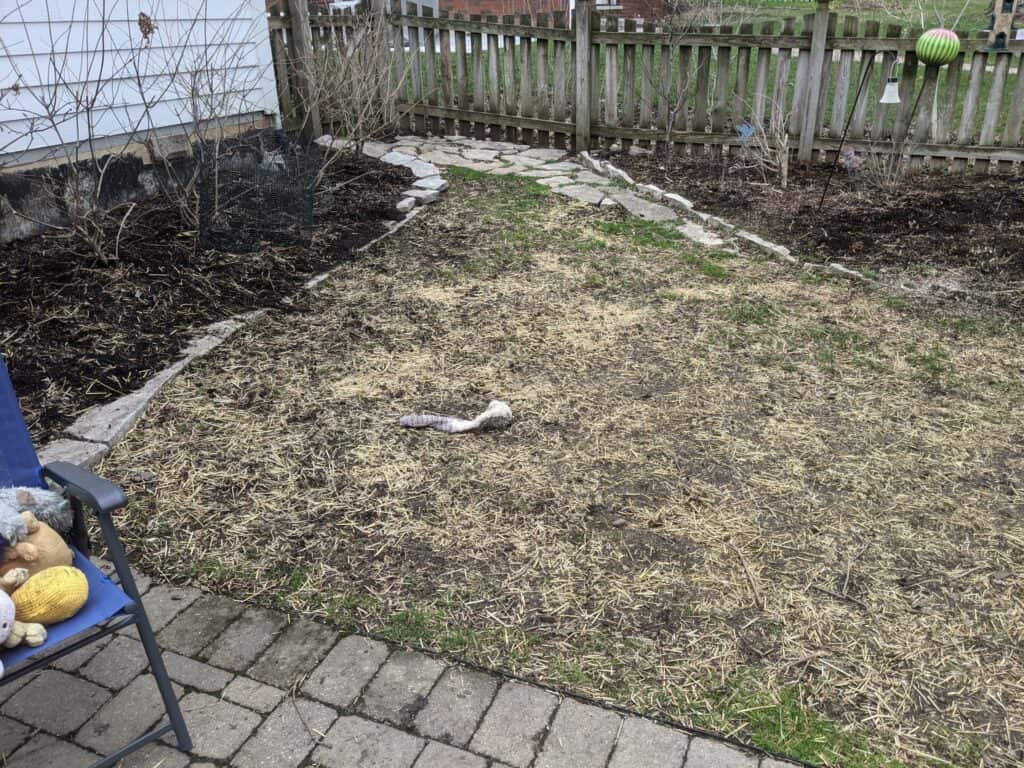
Thin, patchy grass came out, a crushed stone base went in, and the new turf was edged in steel and ringed with fresh hardwood mulch.
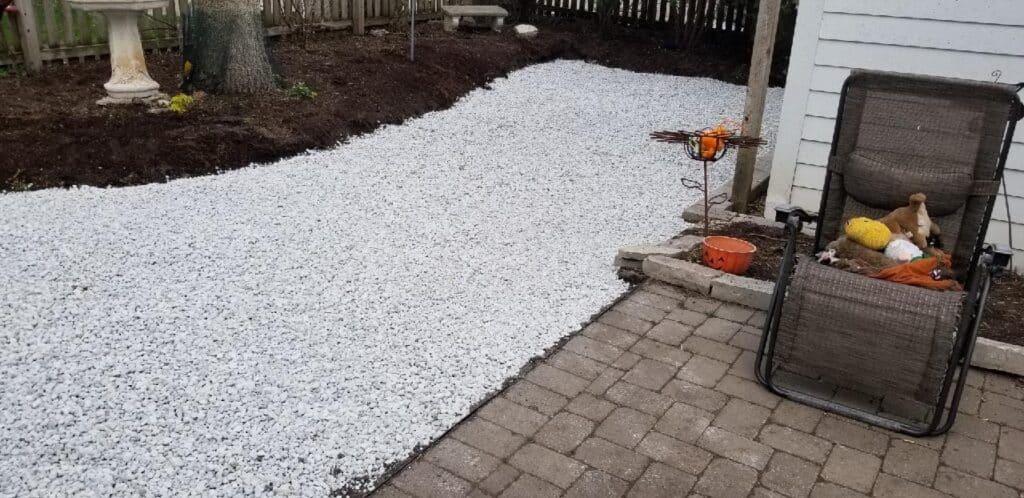
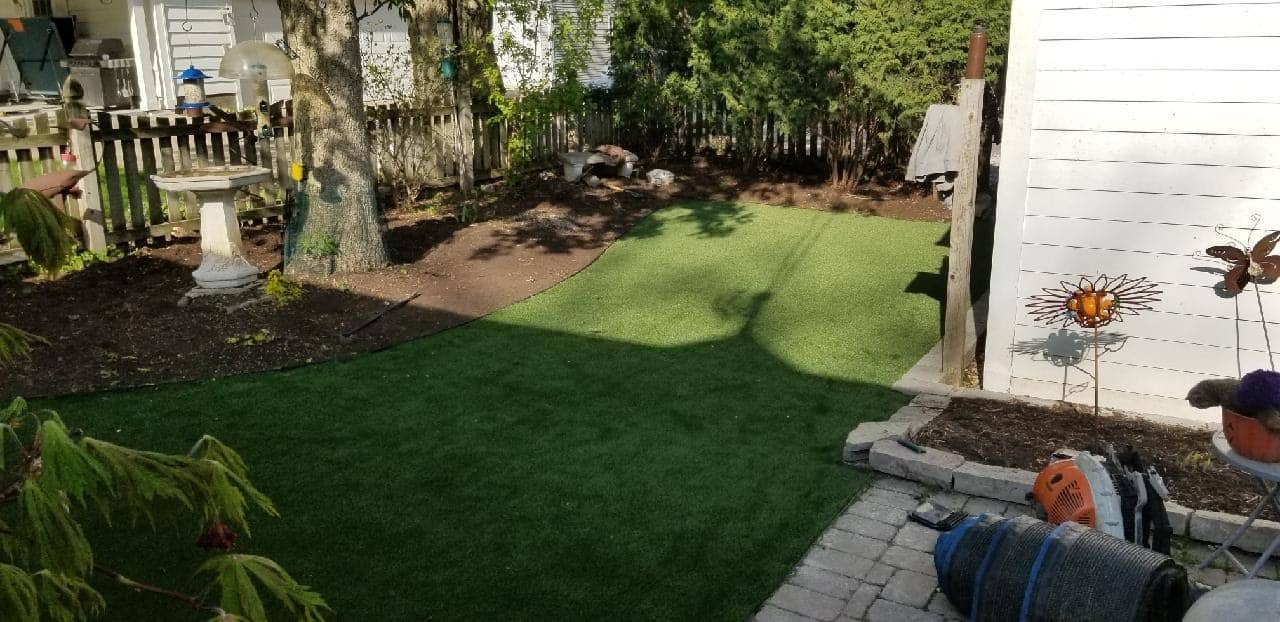
Turf is only as good as what is under it. Every install follows the same order.
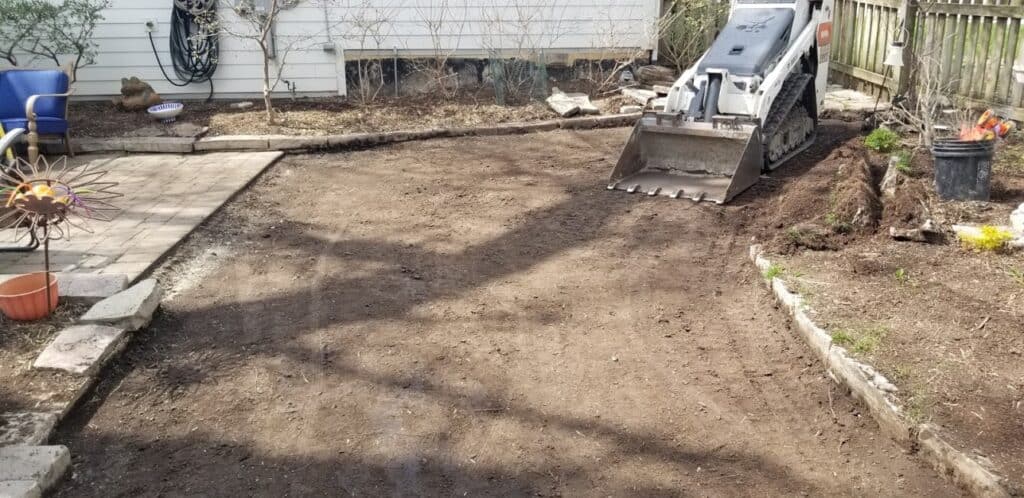
Old grass, roots and debris come out, and the ground is graded level with a skid steer rather than by hand.
If the yard already holds water after rain, that gets fixed first with drain tile or a dry well, so it doesn't pool under the new turf.
Crushed stone is spread, raked level and run over with a compactor, giving the turf a firm, flat bed that drains.
The rolls are cut to follow the curves of the yard, joined with seam tape so the seams don't show, and staked down along the edges.
A stiff broom over the whole area lifts the blades that were flattened in the roll, so it looks like grass the day we leave.
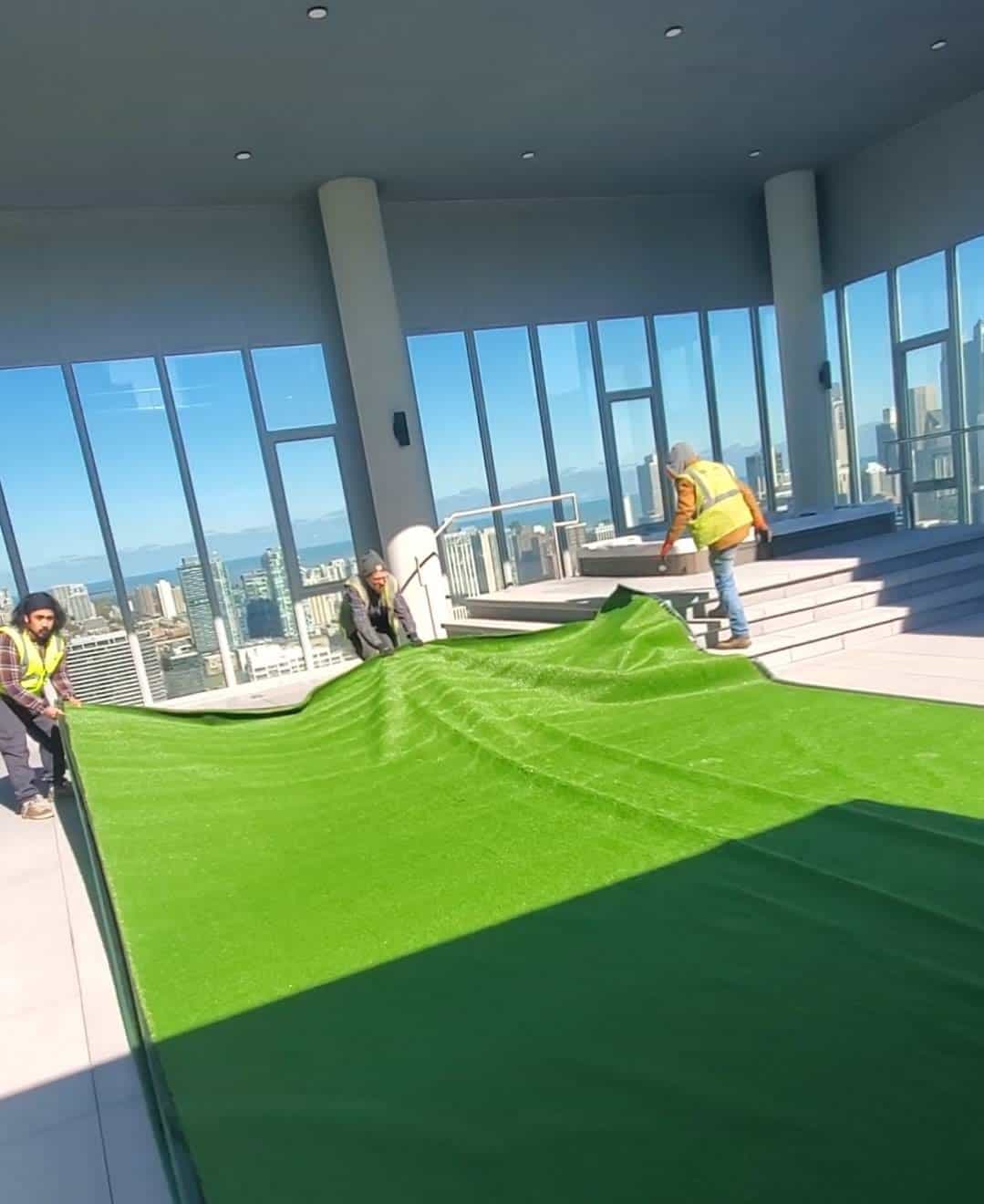
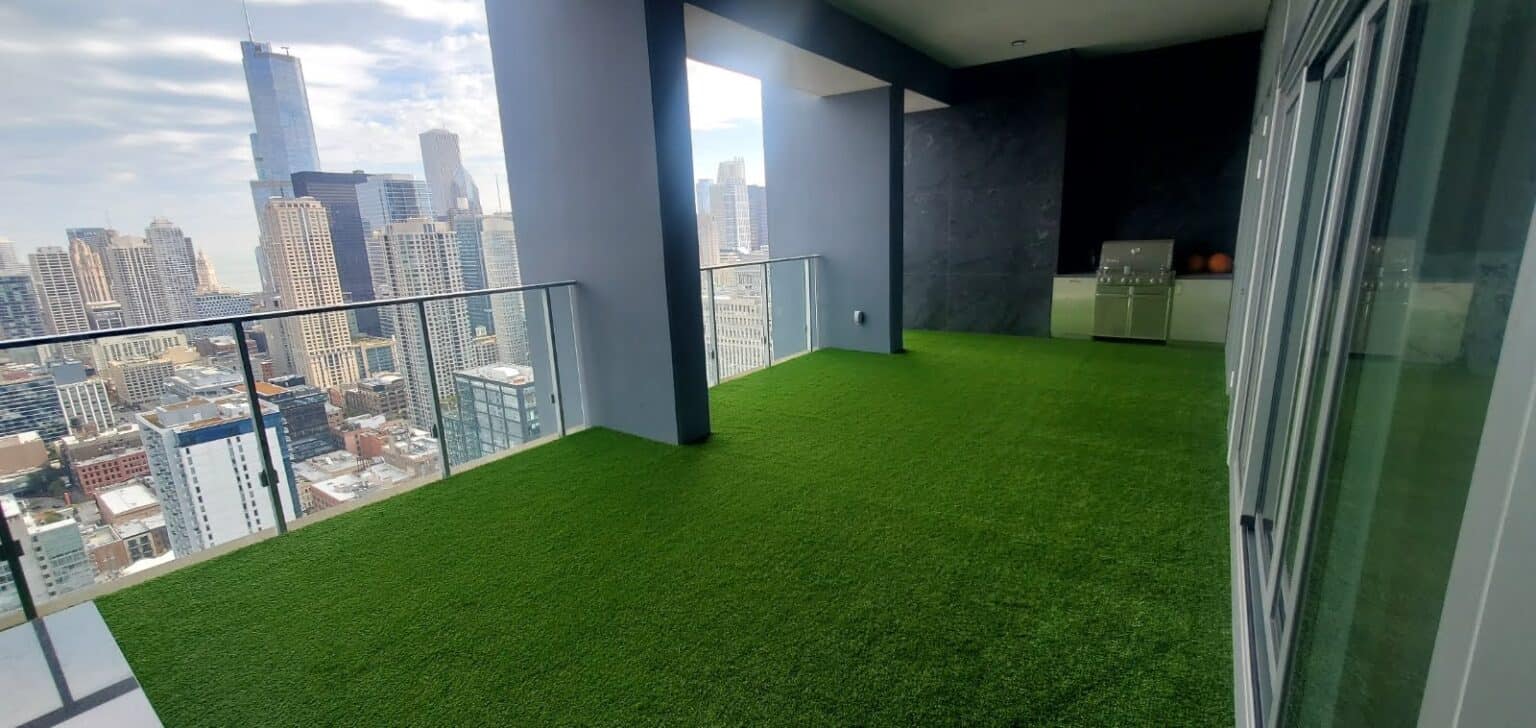
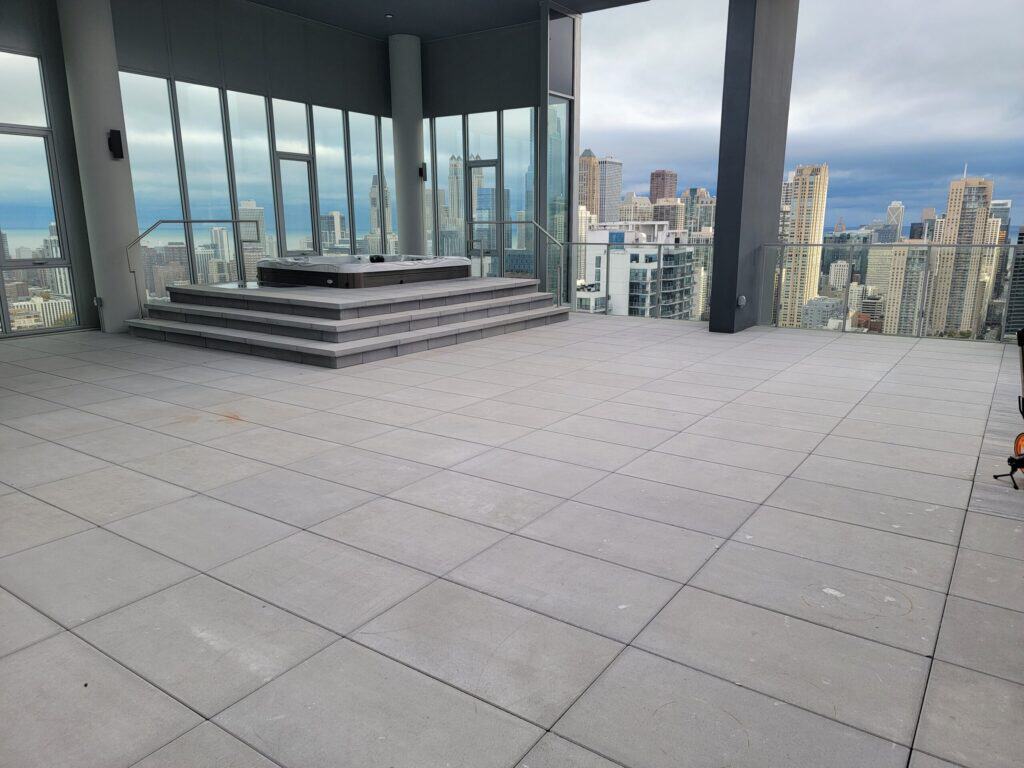
Turf goes down over pavers and decking as well as soil. This terrace is on a high-rise in downtown Chicago.
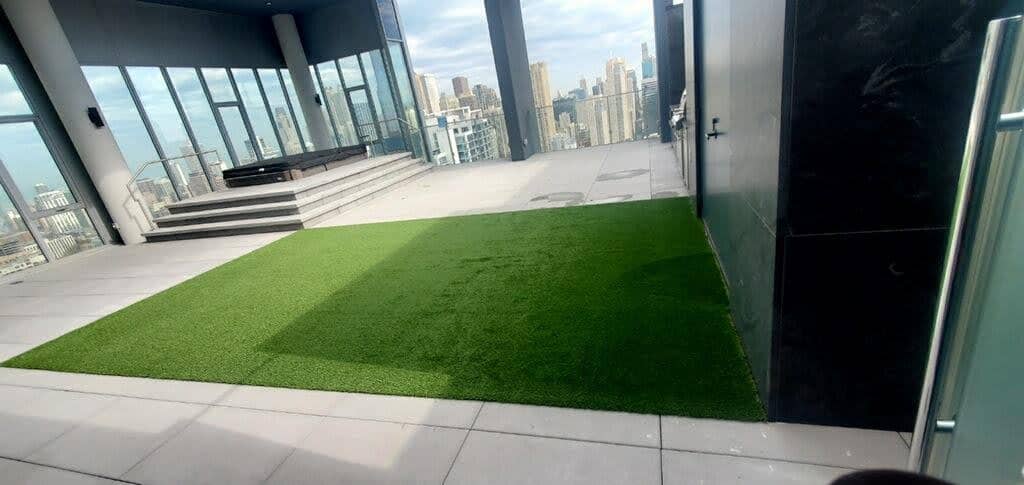
Artificial turf is a synthetic grass surface designed to look like a natural lawn without mowing, watering, or fertilizing. It is installed over a compacted base that allows water to drain through. Many homeowners use it for play areas, pet areas, and spots where real grass struggles to grow. Business owners can use it for high-impact areas such as playgrounds or gathering areas.
Yes. Artificial turf holds up well in Chicago when it is installed over a properly prepared, well-draining base. It stays green through summer heat, dry spells, and shady areas where natural grass often thins out. Proper base preparation helps it handle snow and freeze-thaw cycles.
Artificial turf is a popular choice for families with kids and pets. It provides a clean, even play surface without mud or bare patches. Pet-friendly options are designed to drain quickly and can be rinsed to keep the area fresh.
Quality artificial turf typically lasts 10 to 20 years, depending on use, sun exposure, and care. Heavy daily use and pets can affect lifespan. Occasional brushing and rinsing help keep it looking its best.
Very little. You will not need to mow, water, or fertilize. Routine care includes removing leaves and debris, rinsing it occasionally, and brushing high-traffic areas to keep the fibers upright.
Yes. Artificial turf does not need watering, which can reduce outdoor water use during the growing season. This is one reason many homeowners choose it for areas that would otherwise need frequent irrigation.
Cost depends on the size of the area, the turf product, and how much base preparation is needed. Streamline provides a free estimate with clear pricing before work begins. Request your free artificial turf estimate.
He'll look at the shade, the drainage and how the space gets used, and tell you straight whether turf is the right fix.